
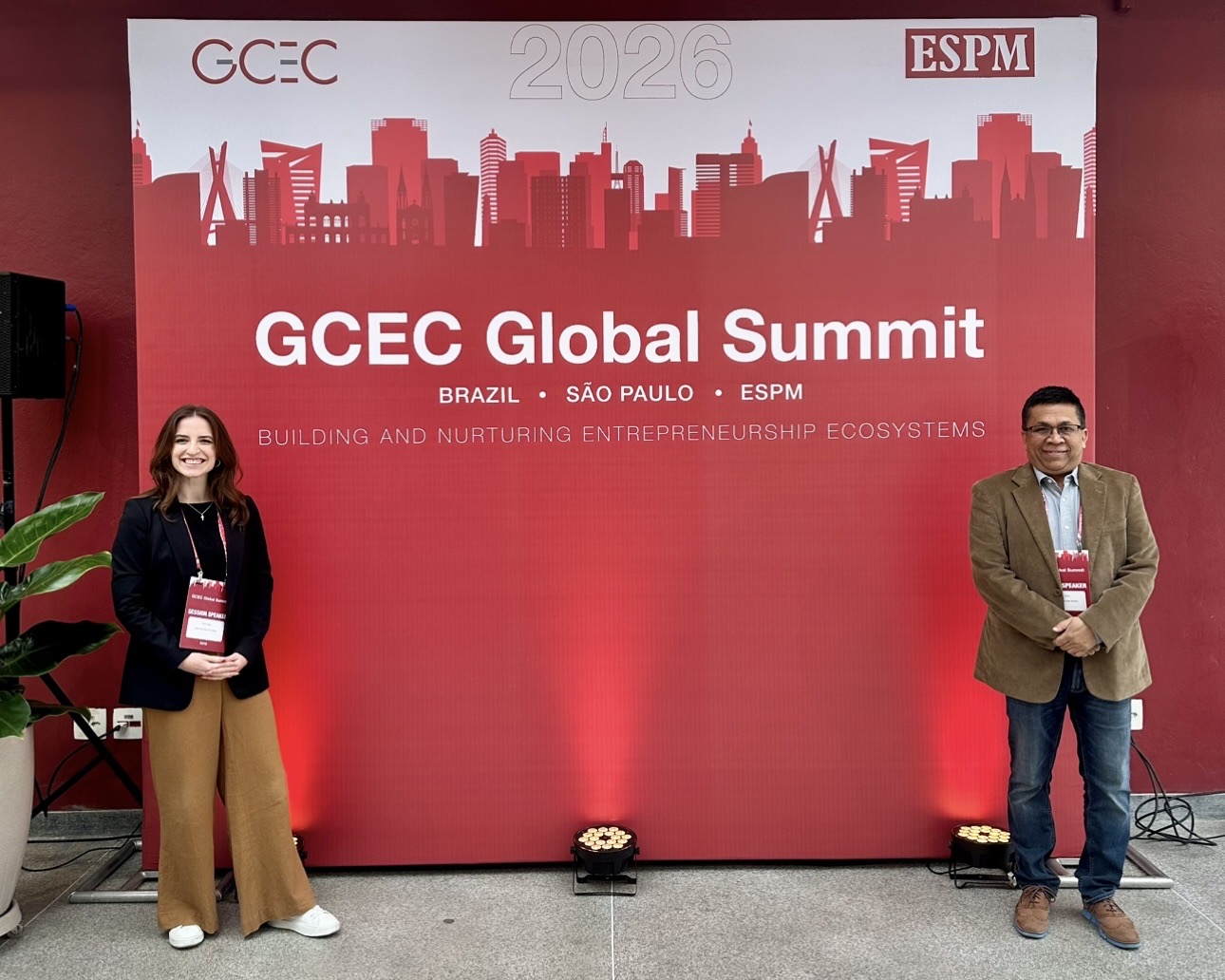
From New Orleans to São Paulo: CECD Shares Ideas at the GCEC Global Summit
CECD leaders presented on global entrepreneurship education and university-wide ecosystem building while connecting with entrepreneurship center colleagues from around the world.


The Center for Entrepreneurship and Community Development (CECD) at Loyola University New Orleans recently represented the university at the 2026 Global Consortium of Entrepreneurship Centers (GCEC) Global Summit in São Paulo, Brazil.
Hosted by ESPM from July 23–25, the Summit brought together entrepreneurship educators, center leaders, researchers, and ecosystem builders from universities around the world to exchange ideas and explore the future of entrepreneurship education.
Representing Loyola were Dr. Mazhar Islam, CECD Faculty Director, and Farah Wells, CECD Program Director, who each presented during the final day of the conference.
Building Global Programs Through Shared Ownership
Dr. Islam presented “Beyond Study Abroad: A Partner-Centered Model for Global Entrepreneurship Education,” drawing from his experience leading intensive study abroad programs in India and Thailand and developing Loyola’s new entrepreneurship-focused J-Term experience in Bolivia.
His presentation explored how his approach to global entrepreneurship education has evolved. Earlier programs offered students access to international markets and local perspectives, but the visiting institution largely retained control over the agenda. The Bolivia program begins with a different question: not simply Where should we take students? But who should help shape what students learn?
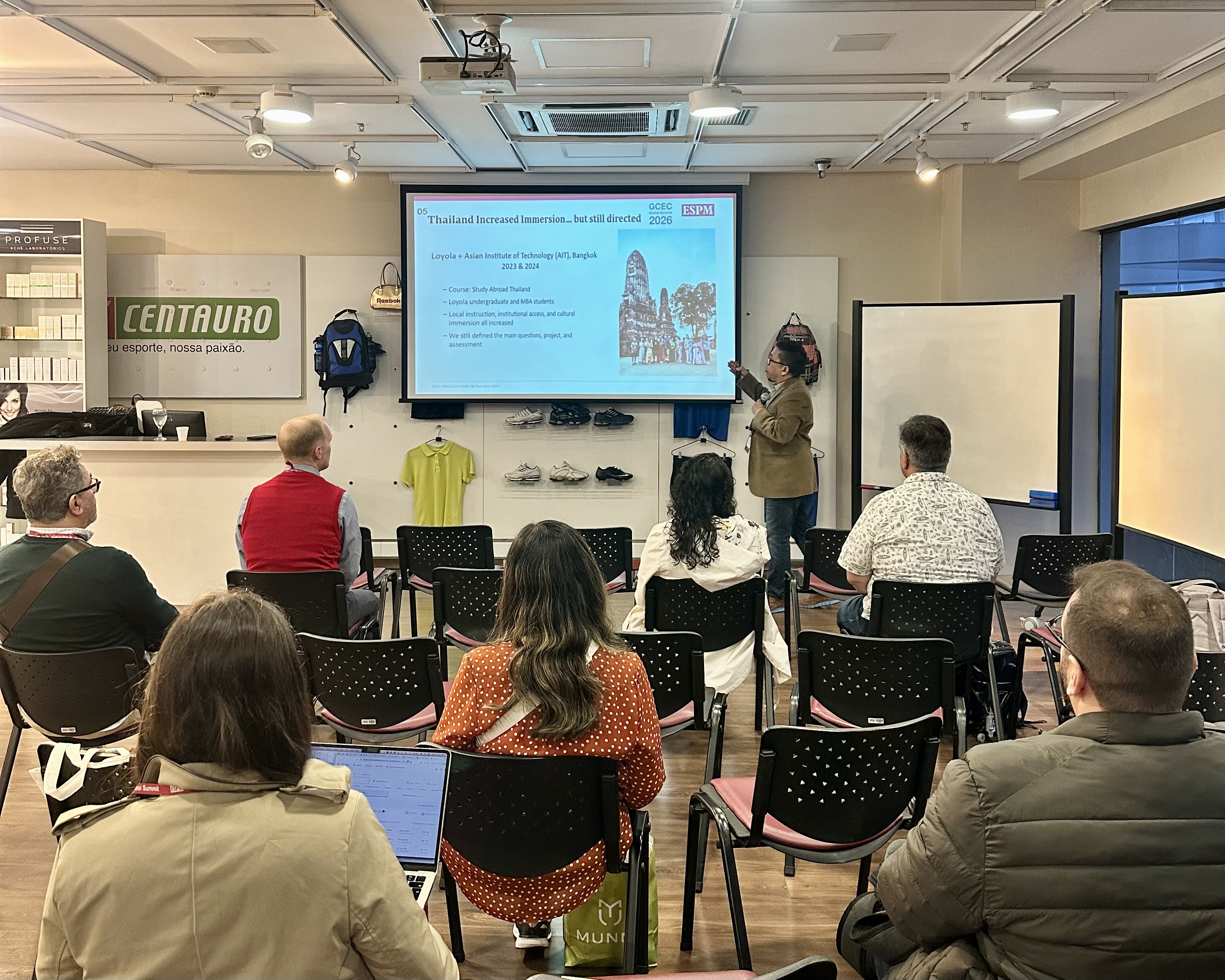
The partner-centered model positions local partners as co-designers, co-teachers, and interpreters rather than solely as hosts or service providers. It also treats local knowledge as a central source of learning, allowing students to learn alongside community partners and engage more deeply with local approaches to entrepreneurship and problem-solving.
The broader shift, Dr. Islam explained, is from learning about a market to learning with a knowledge partner.
Before the formal conference began, Dr. Islam also participated in a gathering of the Jesuit Entrepreneurship Center Alliance (JECA) on Wednesday, July 22, connecting with colleagues from fellow Jesuit institutions. The following morning, he joined a conference excursion to Embraer, the Brazilian aerospace company, for an inside look at innovation and advanced manufacturing in São Paulo’s broader regional ecosystem.
Building Influence Through Relationships
Farah presented “The Team Is the System: Building a Cross-Campus Entrepreneurship Ecosystem Without Formal Authority” alongside David Charles of the University of Illinois Urbana-Champaign, with Erica Berte of Metro State University moderating the combined session.
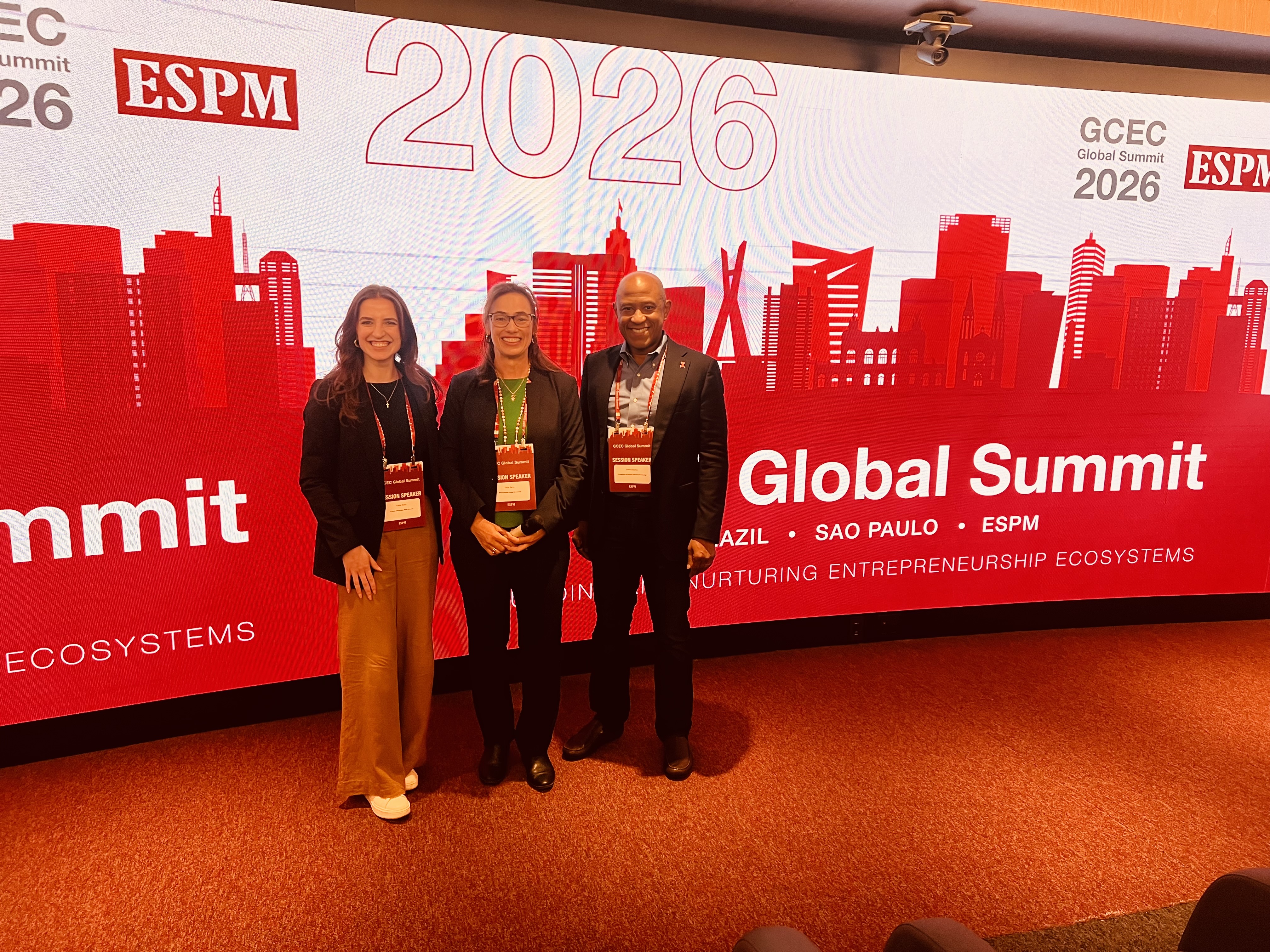
The presentation explored how entrepreneurship centers can expand their reach across a university through trust, shared purpose, and intentional relationship-building.
Although the CECD is housed within Loyola’s College of Business, entrepreneurship already exists across the university. Farah shared how the Center’s team has developed complementary relationships across academics, programming, communications, industry, and university partnerships, creating a connected system that extends well beyond one college.
The presentation drew heavily from Loyola’s experience producing New Orleans Entrepreneur Week (NOEW). During the 2026 Summit, 15% of speakers were Loyola faculty, staff, and alumni, while colleges, administrative offices, student volunteers, faculty, and community partners contributed across planning, promotion, programming, and event operations.
NOEW made the Center’s relationship-based approach especially visible, but the work extends throughout the CECD’s programming, including collaborations with the Jesuit Social Research Institute and partners across Loyola.
The central takeaway was simple: entrepreneurship centers do not always need greater formal authority to create meaningful impact. They need stronger connections.
Learning From a Global Community
The conference opened on the afternoon of July 23 with the keynote “Latin America: Rising Faster Than the World Realizes,” which examined how emerging ecosystems across the region are building global competitiveness.
Over the following days, Dr. Islam and Farah attended sessions led by entrepreneurship center colleagues from universities around the world. Topics ranged from agentic AI and intercollegiate programming to mentorship, center leadership, and global entrepreneurship education.
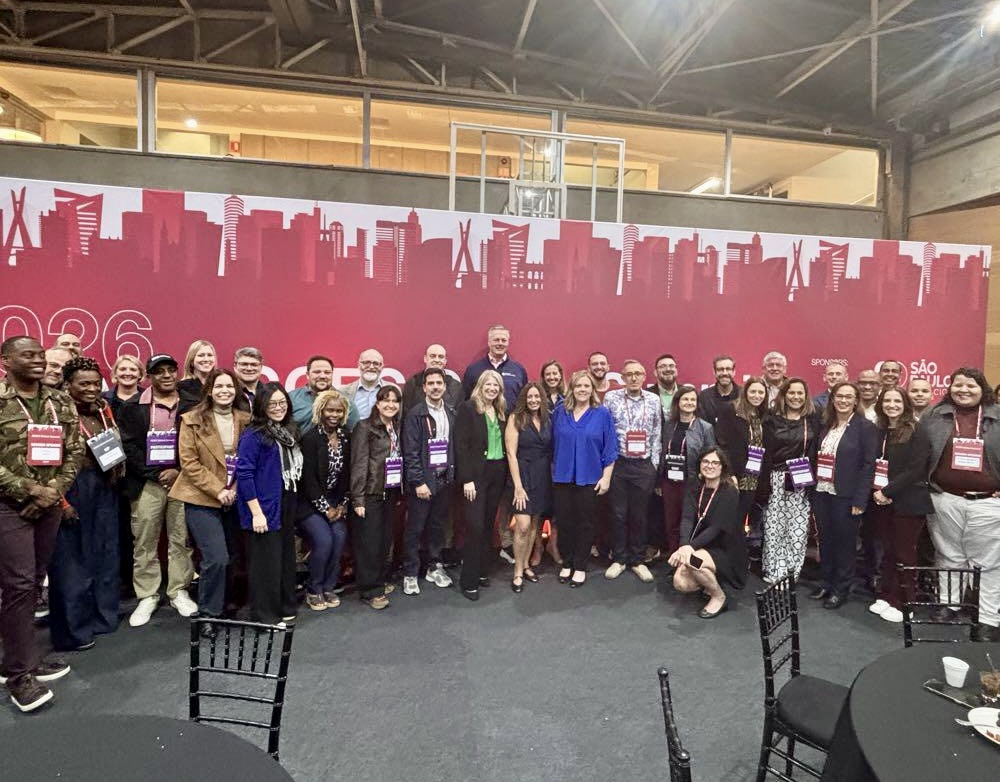
The learning continued beyond the formal sessions through conversations over coffee, shared meals, and time spent connecting with fellow attendees. Those exchanges offered new perspectives, practical ideas, and opportunities for future collaboration.
Both Loyola presentations took place on Saturday, July 25, followed by a closing lunch featuring traditional Brazilian cuisine and the Summit’s final keynote.
Experiencing São Paulo
Outside the conference, Dr. Islam and Farah also had the opportunity to experience São Paulo’s culture, art, food, and entrepreneurial energy.
From exploring the murals of Beco do Batman to experiencing the city’s diverse cuisine and urban landscape, the trip offered a deeper appreciation for the creativity and cultural context surrounding Brazil’s innovation ecosystem.
Bringing New Ideas Back to New Orleans
The CECD team returned to Loyola with new ideas for international programming, campus partnerships, mentorship, emerging technology, and entrepreneurship center leadership.
The experience also reinforced a shared lesson across both presentations: lasting entrepreneurship ecosystems are built with people, not simply for them. Whether designing a global program with an international partner or expanding a center’s reach across a university, meaningful progress begins with listening, trust, and shared ownership.
The CECD looks forward to continuing these conversations at the GCEC Annual Conference in Florida this October and applying new ideas to its work with Loyola students, faculty, alumni, and the New Orleans entrepreneurial community.